

In today’s digital-first world, social media has transformed into more than a platform for casual interaction — it’s a global stage where brands, businesses, and individuals build influence, engage communities, and drive measurable results. But with millions of posts shared every second, standing out in the noise requires more than creativity; it demands strategy, insight, and precision. That’s where social media analytics comes in.
Social media analytics is the process of gathering, tracking, and analyzing data from platforms such as Facebook, Instagram, LinkedIn, TikTok, X (formerly Twitter), and YouTube to evaluate performance and inform smarter decisions. By interpreting key metrics like engagement, reach, and conversions, analytics transforms raw numbers into actionable insights that can significantly improve marketing performance and business growth. In essence, social media analytics bridges the gap between what you think your audience likes and what actually drives results.
This blog explores the meaning, importance, benefits, tools, and best practices of social media analytics — helping you turn data into a roadmap for success in the ever-evolving digital landscape.
What is Social Media Analytics?

At its core, social media analytics refers to the process of collecting and analyzing data from social networks to measure performance and derive insights. This includes tracking interactions such as likes, shares, comments, followers, mentions, impressions, and clicks — then using that data to guide content, advertising, and engagement strategies.
Analytics can be quantitative (numbers and metrics) or qualitative (sentiment and feedback). For instance, while the number of likes on a post shows popularity, analyzing comments can reveal why people engaged — giving you a deeper understanding of audience sentiment.
By consistently monitoring this data, businesses can identify patterns, understand what resonates with their audience, and make data-driven adjustments to improve performance. Ultimately, social media analytics helps transform guesswork into a structured, insight-based marketing strategy.
Why Social Media Analytics Matters

In the early days of social media, success was often measured by vanity metrics — high follower counts or post likes. However, as digital marketing matured, businesses realized that these numbers alone don’t reflect real impact or ROI. Modern social media analytics goes beyond surface-level metrics to uncover how social interactions contribute to tangible business goals such as website traffic, brand awareness, lead generation, and sales.
Here’s why analytics matters:
1. Measures ROI and Business Impact
Analytics allows marketers to connect social media activities directly to business outcomes. By tracking metrics like conversions, click-through rates, and sales, you can determine which campaigns deliver the best return on investment (ROI) and allocate resources accordingly.
2. Enhances Audience Understanding
Social media analytics helps businesses understand who their audience is — demographics, locations, interests, and behaviours. This knowledge enables better content targeting, personalized engagement, and improved customer satisfaction.
3. Optimizes Content Strategy
With analytics, you can identify which types of content (videos, infographics, stories, etc.) perform best on specific platforms. This empowers you to refine your content strategy for maximum reach and engagement.
4. Tracks Competitor Performance
Social media analytics tools allow brands to monitor competitors’ performance, content, and engagement strategies. This competitive insight can reveal gaps and opportunities in your own approach.
5. Supports Real-Time Decision Making
Social media moves fast. Analytics dashboards provide real-time insights that allow you to adapt campaigns on the go — adjusting budgets, timing, or messaging based on live performance data.
In short, without social media analytics, digital marketing is like driving blindfolded. With it, you gain visibility, control, and confidence in every decision.
Key Metrics to Track in Social Media Analytics

To get the most out of social media analytics, you need to track the right metrics that align with your goals. These metrics fall into several categories:
1. Engagement Metrics
- Likes, comments, shares, and saves – Indicate how actively users are interacting with your content.
- Engagement rate – Measures total engagement relative to followers or reach.
- Click-through rate (CTR) – Shows how many users clicked on a link in your post or ad.
2. Awareness Metrics
- Reach – The number of unique users who saw your content.
- Impressions – The total number of times your content was displayed.
- Follower growth – The rate at which your audience increases over time.
3. Conversion Metrics
- Leads generated – Number of users who filled out a form or showed buying intent.
- Sales conversions – How many sales originated from social media campaigns.
- Cost per acquisition (CPA) – Measures how much it costs to gain one new customer from social campaigns.
4. Customer Sentiment Metrics
- Brand mentions – How often your brand is talked about online.
- Sentiment analysis – Whether those mentions are positive, neutral, or negative.
- Customer feedback – Qualitative insights that reveal how people feel about your brand.
By monitoring these key performance indicators (KPIs), you can measure both the quantitative and emotional impact of your social media presence.
The Process of Social Media Analytics

To effectively use social media analytics, follow these essential steps:
Step 1: Define Clear Goals
Start with the question — What do you want to achieve?
Goals can include brand awareness, website traffic, lead generation, or customer engagement. Clearly defined objectives ensure you track metrics that actually matter.
Step 2: Choose the Right Tools
Each social platform offers built-in analytics, but third-party tools like Hootsuite, Sprout Social, Buffer, and Google Analytics provide a more comprehensive view. These tools allow you to track performance across multiple platforms in one place.
Step 3: Collect and Organize Data
Regularly gather data from all your active social accounts. Export or automate reports that track relevant metrics over time. Consistent tracking helps identify patterns and long-term trends.
Step 4: Analyze and Interpret Results
Raw data alone doesn’t mean much — insights come from interpretation. Look for trends:
- Which posts perform best?
- What time of day brings the most engagement?
- Which platforms drive the most conversions?
Step 5: Apply Insights and Optimize
Use your findings to improve strategy. If videos drive higher engagement than images, focus more on video content. If your engagement drops on weekends, adjust posting times.
Step 6: Report and Share
Create monthly or quarterly analytics reports for your team or clients. Visual dashboards make complex data easy to understand and help track progress against goals.
Popular Tools for Social Media Analytics

There’s no shortage of tools available to make analytics easier. Here are some of the most popular ones:
- Hootsuite Analytics – Provides in-depth performance reports, content analysis, and custom dashboards.
- Sprout Social – Offers social listening, sentiment tracking, and advanced engagement metrics.
- Buffer Analyze – Designed for small businesses, it simplifies post tracking and engagement measurement.
- Google Analytics – Integrates social media with website performance to measure conversions and referral traffic.
- Brand watch – Specializes in social listening, sentiment analysis, and competitive benchmarking.
- HubSpot – Combines social media metrics with CRM data to track full-funnel performance.
Choosing the right tool depends on your business size, budget, and analytical needs. For most businesses, combining native analytics (from Facebook or Instagram) with a third-party dashboard provides the best balance of detail and convenience.
Benefits of Using Social Media Analytics
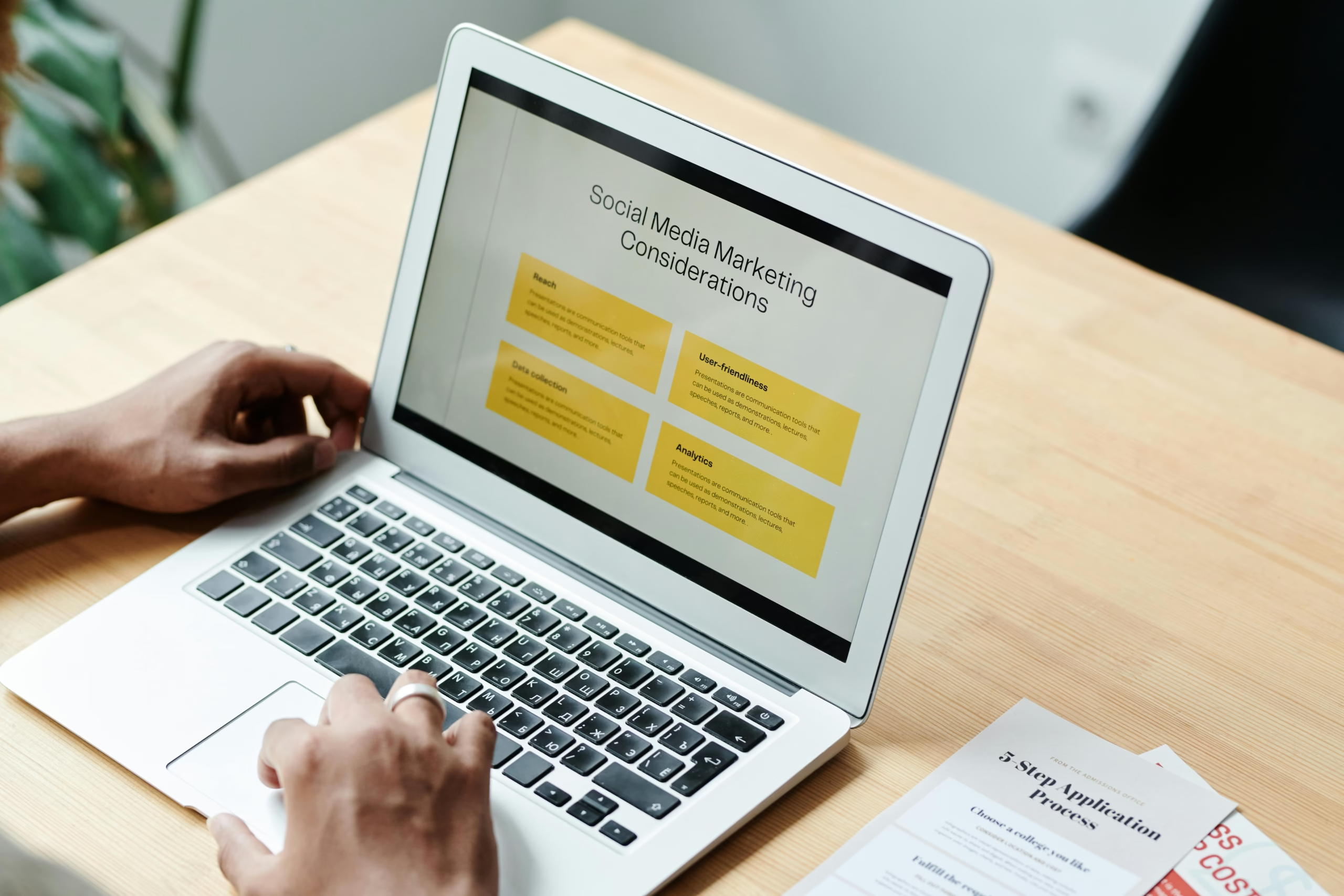
The benefits of incorporating social media analytics into your strategy are substantial.
1. Data-Driven Decision Making
Analytics replaces assumptions with facts. Instead of guessing what content will work, you make decisions based on measurable data and proven performance trends.
2. Improved ROI
By identifying which platforms and campaigns generate the best results, you can optimize budgets and increase returns from paid and organic efforts.
3. Enhanced Customer Insights
Analytics reveals audience preferences, helping brands tailor messages that resonate more deeply with followers and potential customers.
4. Better Campaign Optimization
Continuous tracking helps refine ad targeting, posting frequency, and creative direction — ensuring every campaign performs better than the last.
5. Crisis Detection and Management
Social listening tools within analytics platforms can alert you to spikes in negative sentiment, allowing for quick responses to potential PR issues.
6. Competitive Advantage
By monitoring competitors’ performance, you can identify opportunities to innovate and stay ahead in your industry.
Common Challenges in Social Media Analytics

Despite its advantages, social media analytics comes with challenges:
1. Information Overload
There’s a vast amount of data to sort through. Without clear goals, you may drown in numbers without finding useful insights.
2. Vanity Metrics
Focusing only on likes or followers can be misleading. High engagement doesn’t always translate to conversions or sales.
3. Attribution Issues
Determining which social interactions lead to actual conversions can be complex, especially when users engage across multiple touchpoints.
4. Constant Platform Changes
Social algorithms and metric definitions evolve frequently, making it necessary to adapt your analytics approach regularly.
5. Data Accuracy
Fake followers or bot engagement can distort results, requiring careful filtering and data validation.
Overcoming these challenges requires a structured analytics strategy and reliable tools that ensure consistency and accuracy.
Best Practices for Effective Social Media Analytics

To maximize the benefits of social media analytics, follow these best practices:
- Set SMART goals — Specific, Measurable, Achievable, Relevant, and Time-bound.
- Focus on actionable metrics — Track what impacts business outcomes, not just vanity metrics.
- Use data visualization — Dashboards and graphs make complex insights easier to communicate.
- Compare over time — Analyze trends weekly or monthly to measure progress.
- Integrate analytics with other data sources — Combine social data with website or CRM data for a complete customer view.
- Monitor in real-time — Use alerts and dashboards to respond quickly to opportunities or crises.
- Test and experiment — Run A/B tests to find the most effective content and posting times.
Consistent measurement and optimization are the keys to sustained social media success.
The Future of Social Media Analytics

The future of social media analytics is driven by technology — particularly artificial intelligence (AI) and machine learning.
- Predictive Analytics: Future tools will not only report what happened but also predict what will happen next, allowing brands to anticipate trends and user behavior.
- AI-Powered Insights: Sentiment analysis and natural language processing will provide deeper emotional insights from user comments and feedback.
- Cross-Platform Integration: Analytics systems will offer unified dashboards covering all major networks and integrating with e-commerce, CRM, and advertising data.
- Real-Time Optimization: AI will enable instant adjustments to ad spend or content distribution based on live performance.
As analytics technology evolves, marketers will gain even greater clarity and control over their social media strategies.
Conclusion
In an increasingly competitive digital landscape, success on social media requires more than creativity — it requires clarity, backed by data. Social media analytics empowers brands to measure, understand, and improve every aspect of their online presence. From identifying what content performs best to measuring ROI and predicting audience behavior, analytics transforms social media from a guessing game into a powerful, data-driven strategy.
The brands that embrace analytics today are the ones that will lead tomorrow — because in the world of digital marketing, knowledge isn’t just power; it’s profit. By mastering social media analytics, you turn every like, share, and click into meaningful progress toward your goals.
Author: Fathima Saniyya